




Doppelgänger Dating: Why we’re attracted to people who look like us
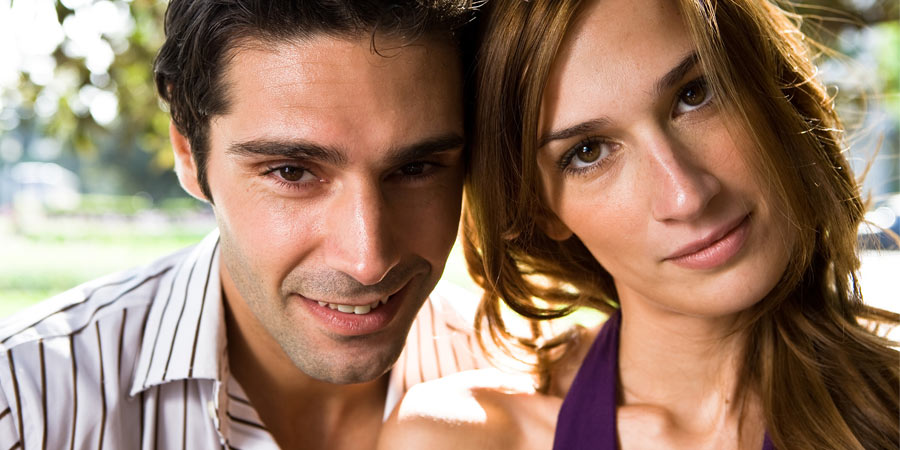
Most of us have a “type” - tall, dark & handsome springs to mind - or we’re attracted to partners with a specific physical attribute like their height or the colour of their eyes. But have you ever noticed how some couples look like they could be siblings? Same eyes, same smile, same “are we at brunch or a mirror maze?” energy? Welcome to the curious world of doppelgänger dating where love and mirror images go hand in hand.
In the age of selfies and swipes, doppelgänger dating has gone viral. TikTok is full of couples who look like carbon copies, and people can’t stop making comments like “Are you sure you’re not related?” And there are dozens of online articles about celebrity couples who look eerily similar.
Before you panic and start analysing your couple selfies, relax. Being attracted to someone who looks like you doesn’t mean you’re secretly in love with your reflection. There’s actually a fascinating mix of psychology, biology and neuroscience behind it.
Familiar faces feel safe
Our brains are basically wired to love what we already know. Psychologists call this the mere exposure effect - the more familiar something is, the more we tend to like it. It’s why you keep rewatching the same streaming show or ordering “your usual” at a local café.
Researchers at the University of Liverpool found that people tend to prefer faces resembling their own over strangers. It’s not vanity, it’s evolution! The theory is that familiar-looking faces register as safe and trustworthy. We subconsciously think “they seem like my people” and our brains light up with feel-good chemicals.
It might be in the genes
There’s also a biological angle called assortative mating, which sounds like a dating app for scientists but is really just the idea that people tend to partner with others who share similar traits - physical or genetic.
From an evolutionary standpoint, it makes sense. Basically, Mother Nature is saying, “You two share enough traits to make a great team.”
We’re all a little self-obsessed (and that’s ok)
In studies, people often rate blended photos of their own faces as more attractive than random strangers - even when they didn’t know it was them. Yep, deep down, we kinda love ourselves. Not in a mirror-kissing, ego-maniacal way but more in a “hey, you seem familiar” kind of way.
But it’s not narcissism, it’s comfort. You see a face that feels familiar and safe, and your brain rewards you with a little jolt of oxytocin. So if your partner looks a bit like you, it’s not an ego trip - it’s biology giving you a cosy sense of “home.”
The longer you’re together, the more you’ll match
Even if you didn’t start off looking like your partner, give it time. A study from the University of Michigan found that long-term couples’ faces actually grow more similar over the years. Why? It comes down to shared emotions. When you laugh, smile, frown and make faces together for decades your facial muscles start to “sync up”.
So if you’ve started noticing that you and your partner could pass for a “his and hers” version of each other - congrats! You’ve literally grown together.
So should you be concerned?
Not at all! Dating someone who looks like you is way more common than you’d think. Humans like familiarity, shared backgrounds and faces that make us feel comfortable.
So next time you catch yourself thinking “Huh, we kind of look alike” don’t freak out. Just smile, take that matching selfie, and embrace your doppelgänger destiny. After all, maybe love really is looking in the mirror.
Likes & Comments
No comments yet